

Trolltunga, Hardanger A long, demanding mountain hike above Ringedalsvatnet near Odda, ending at one of Norway’s most recognisable rock formations. A full mountain day Start from P3 Mågelitopp or P2 Skjeggedal and plan for 7–12 hours on the mountain, depending on your starting point. The Troll’s Tongue Trolltunga projects above Ringedalsvatnet after a long approach through exposed mountain terrain where weather, pace and preparation matter.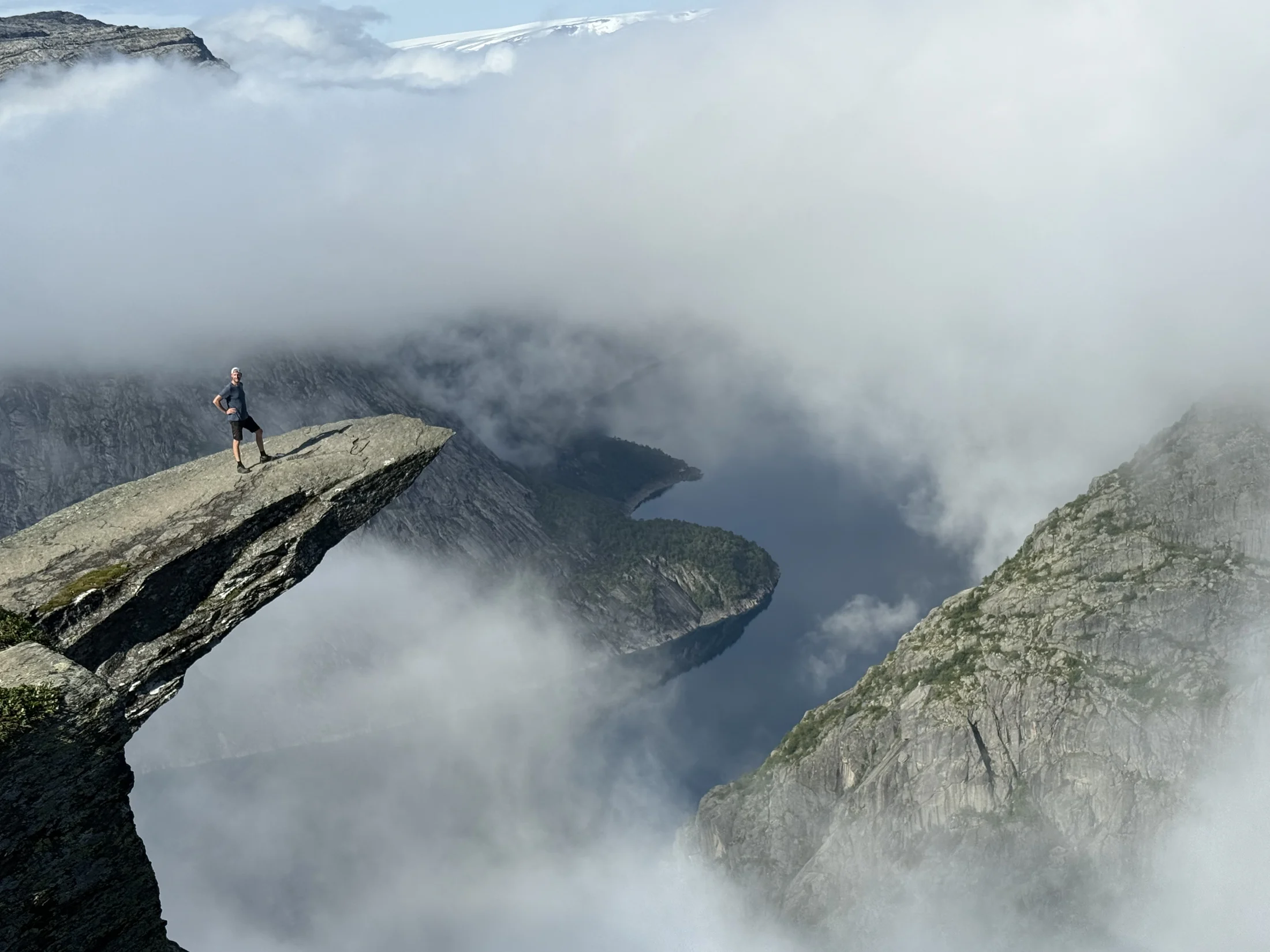
Trolltunga – Norway’s Iconic Mountain Ledge
20–27 km Through High-Mountain Terrain
1,180 Metres Above Sea Level


A long mountain day before you ever reach the famous rock.
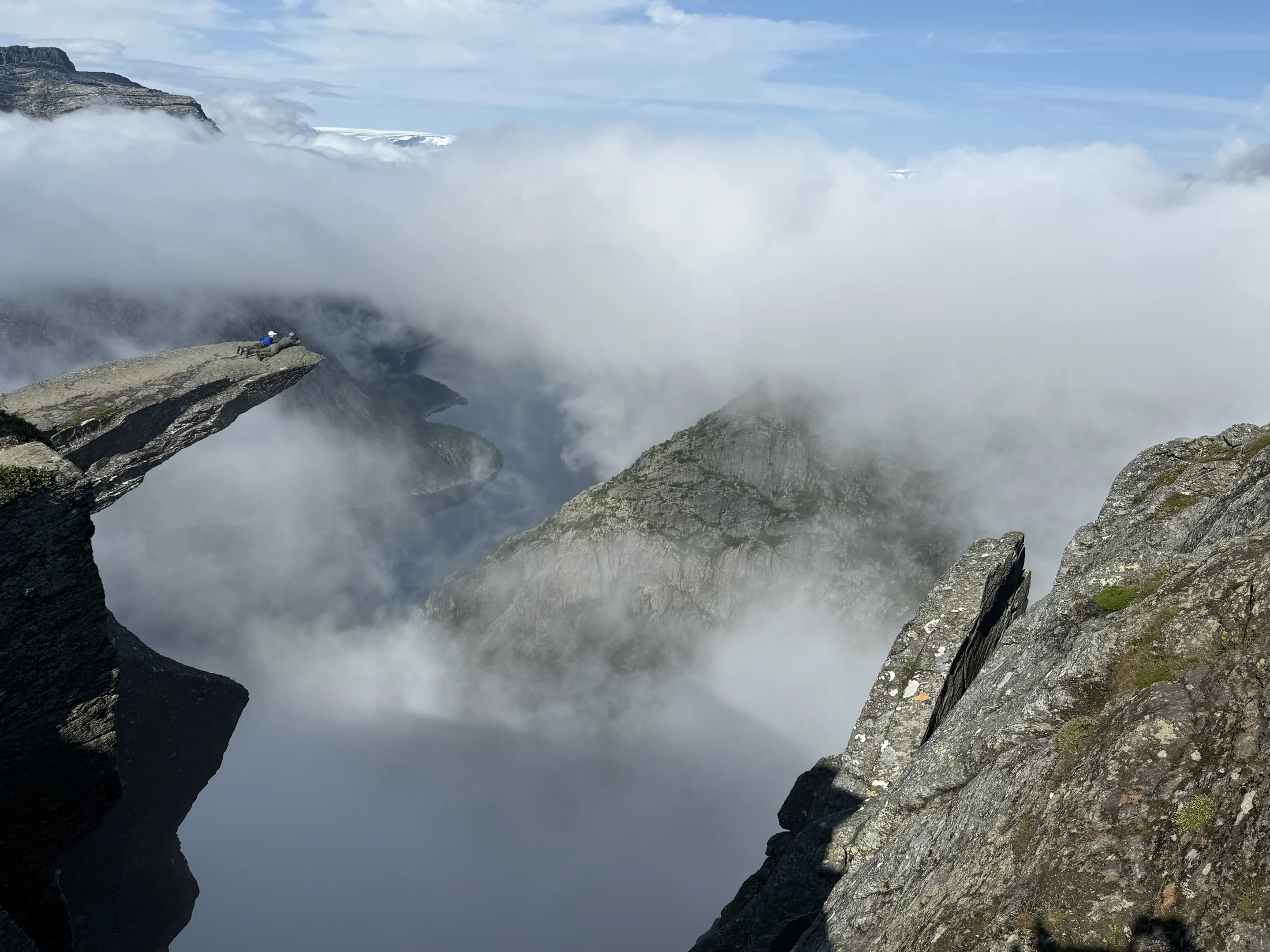
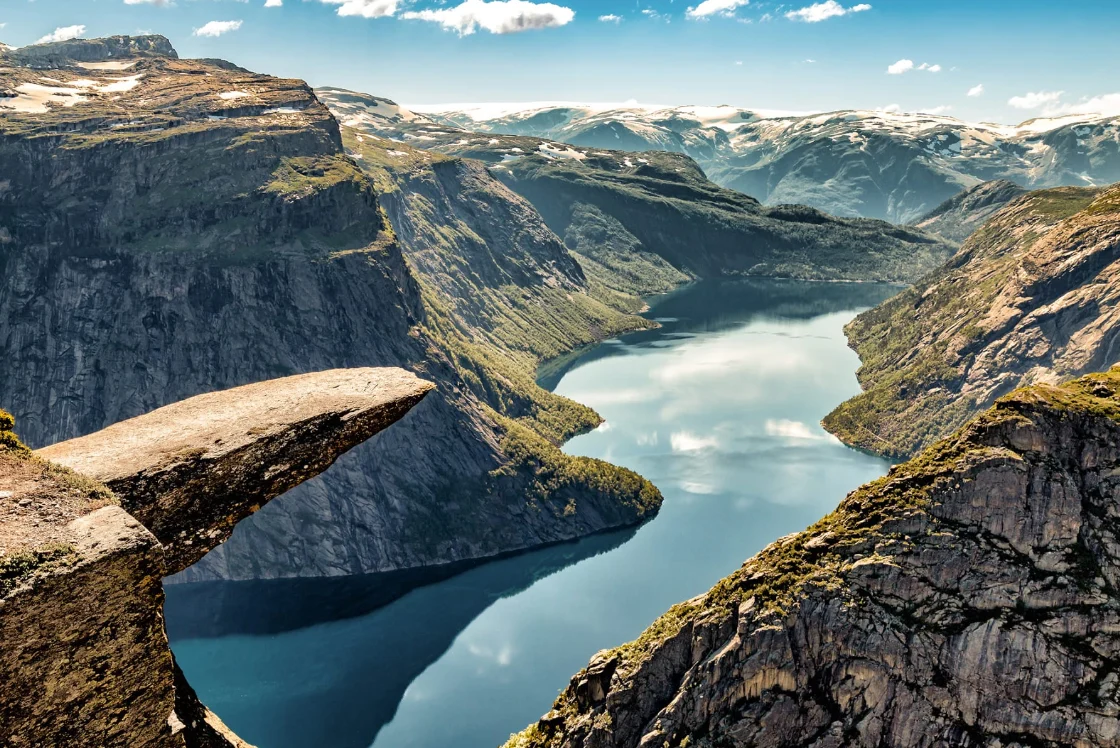
Trolltunga sits at 1,180 metres above sea level, projecting over Ringedalsvatnet near Odda in Hardanger. The rock ledge is the destination, but the scale of the hike is what defines the day: long distances, high-mountain terrain, changing weather and a sustained return journey.
From P2 Skjeggedal, the standard round trip is about 27 km and normally takes 8–12 hours. Starting from P3 Mågelitopp reduces the route to about 20 km and 7–10 hours. Either way, Trolltunga is a full mountain day and is graded very demanding.
Trolltunga at a glance
Built by first responders. Guided by first responders.
John and Gert Olsson founded TrollAdventure. Our guides come exclusively from first-responder backgrounds — including firefighters, police officers and medics. That experience shapes the way we guide: calm decisions, practical risk awareness, clear communication and close attention to weather, pace and changing mountain conditions. On Trolltunga, that means managing a long day around the group’s pace, weather, daylight and the conditions across exposed high-mountain terrain.
Want Trolltunga included in a longer Norway hiking journey? See our multi-day hiking adventure combining several of Norway’s major hikes.
How the Trolltunga hike develops
The route is long rather than technically difficult. From P2 Skjeggedal you climb to P3 Mågelitopp before continuing across high-mountain terrain; starting from P3 removes that first road climb but still leaves about 20 km return.
This is a simplified route profile, not a GPS elevation chart. For current trail information, transport and seasonal guidance, see the official Trolltunga hiking information.
What the route is actually like
From P2 Skjeggedal, the route first climbs towards Mågelitopp before continuing into open mountain terrain. Starting from P3 removes that first section, but the remaining hike is still long and exposed. The trail crosses rock, wet ground and rolling high-mountain terrain with several sustained climbs.
The main challenge is duration. A strong start can make the first hours feel straightforward, but Trolltunga is an out-and-back hike and you need enough energy, food, clothing and daylight for the full return. Weather can also change quickly above the plateau.
The rock ledge arrives late in the day. Ringedalsvatnet appears below and the landscape opens, but reaching Trolltunga is only the halfway point. The return journey deserves the same planning as the approach.
What to bring
- Good hiking shoes with grip
- Wind- and rain-resistant outer layer
- Extra warm layer
- Water and food
- Small backpack
- Headlamp when daylight is limited
- Winter traction equipment when conditions require it
Why Trolltunga is worth the long day
The rock ledge
Trolltunga projects horizontally from the mountainside above Ringedalsvatnet. The famous photograph is real, but the scale makes more sense after several hours on foot through the surrounding terrain.
Ringedalsvatnet below
The lake lies far below the ledge and gives the viewpoint much of its depth. On clear days, the mountain landscape stretches well beyond the immediate valley.
The high-mountain approach
Long sections of the route cross open plateau terrain, passing small lakes, exposed rock and broad views. Trolltunga is not a short climb to a single viewpoint; the approach is a substantial part of the experience.
A day that rewards pacing
Starting early helps, but the important part is keeping a sustainable pace. The hike is long enough that food, breaks, weather and the return journey all need to be managed from the beginning.
Trolltunga is more than the final photograph
 Trolltunga viewpoint above the clouds in Hardanger
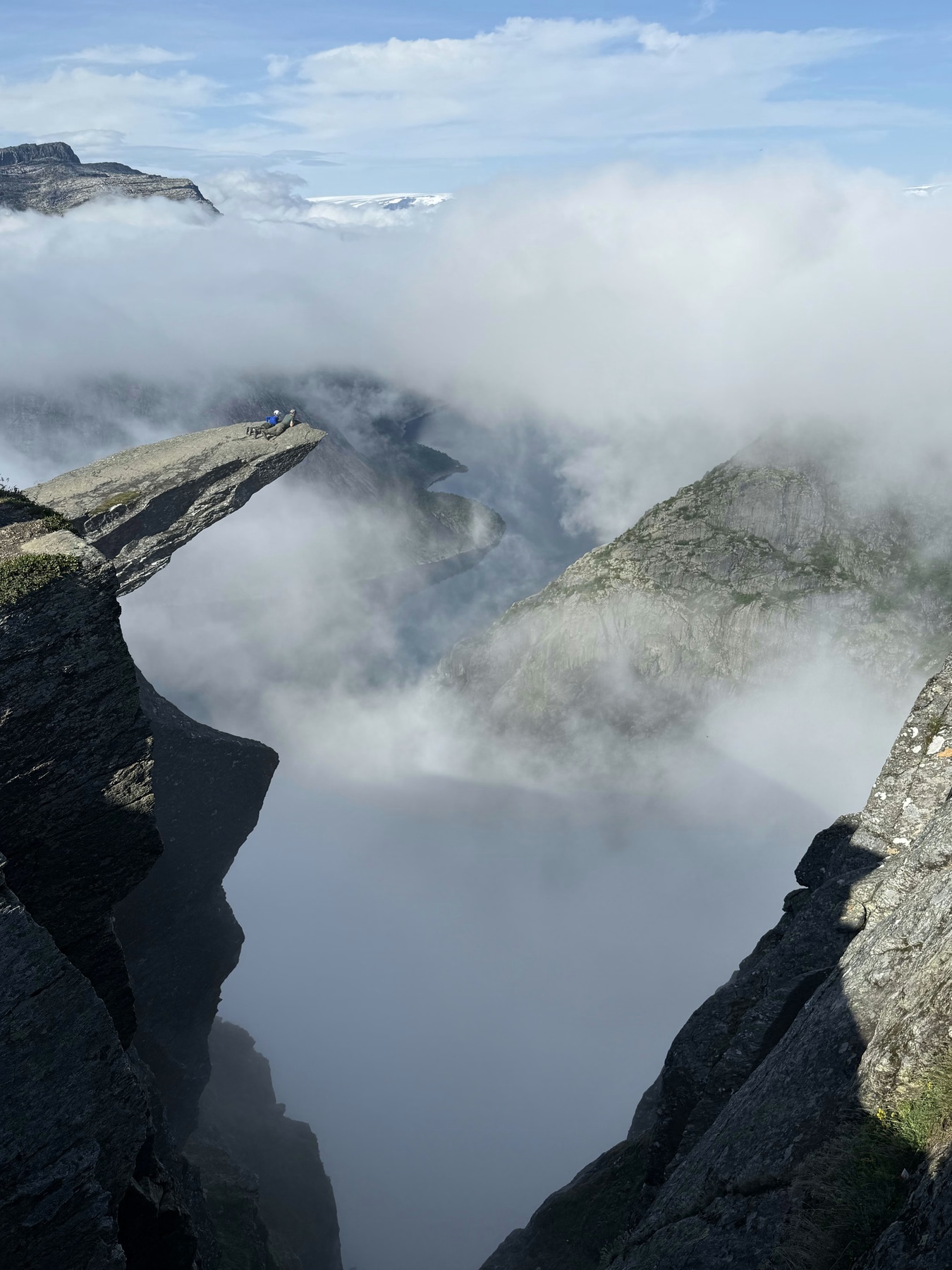 Trolltunga rock ledge in changing mountain weather
 Lone hiker in mist on the Trolltunga route
 Dramatic clouds over the Trolltunga mountain plateau
 Hiker on Trolltunga above Ringedalsvatnet
 Mirror lake on the Trolltunga mountain plateau
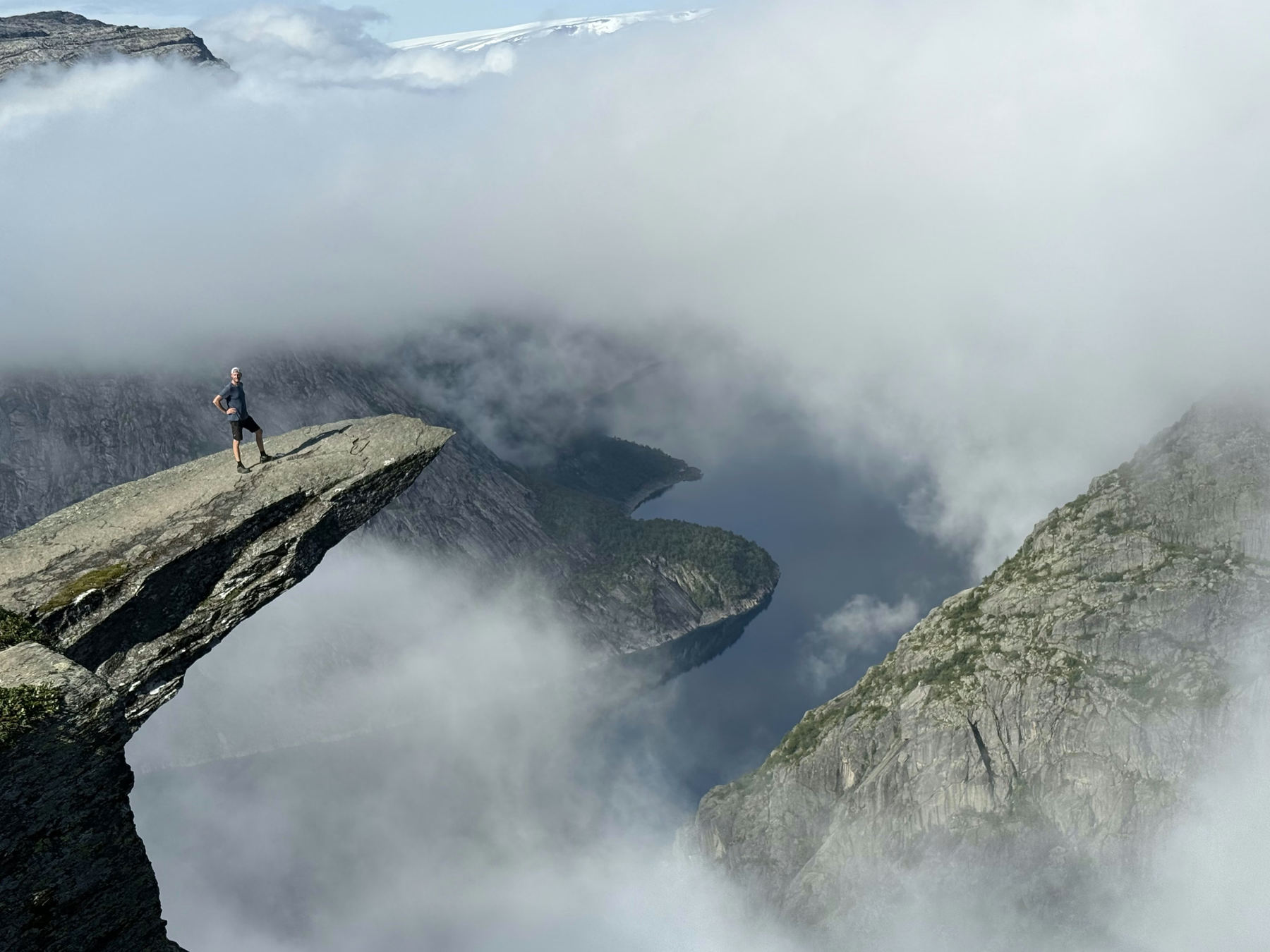 Hiker on Trolltunga during a break in the clouds
 Hikers above the clouds on the Trolltunga route
 Alpine lake on the Trolltunga trail
 Mountain view along the Trolltunga route in Hardanger
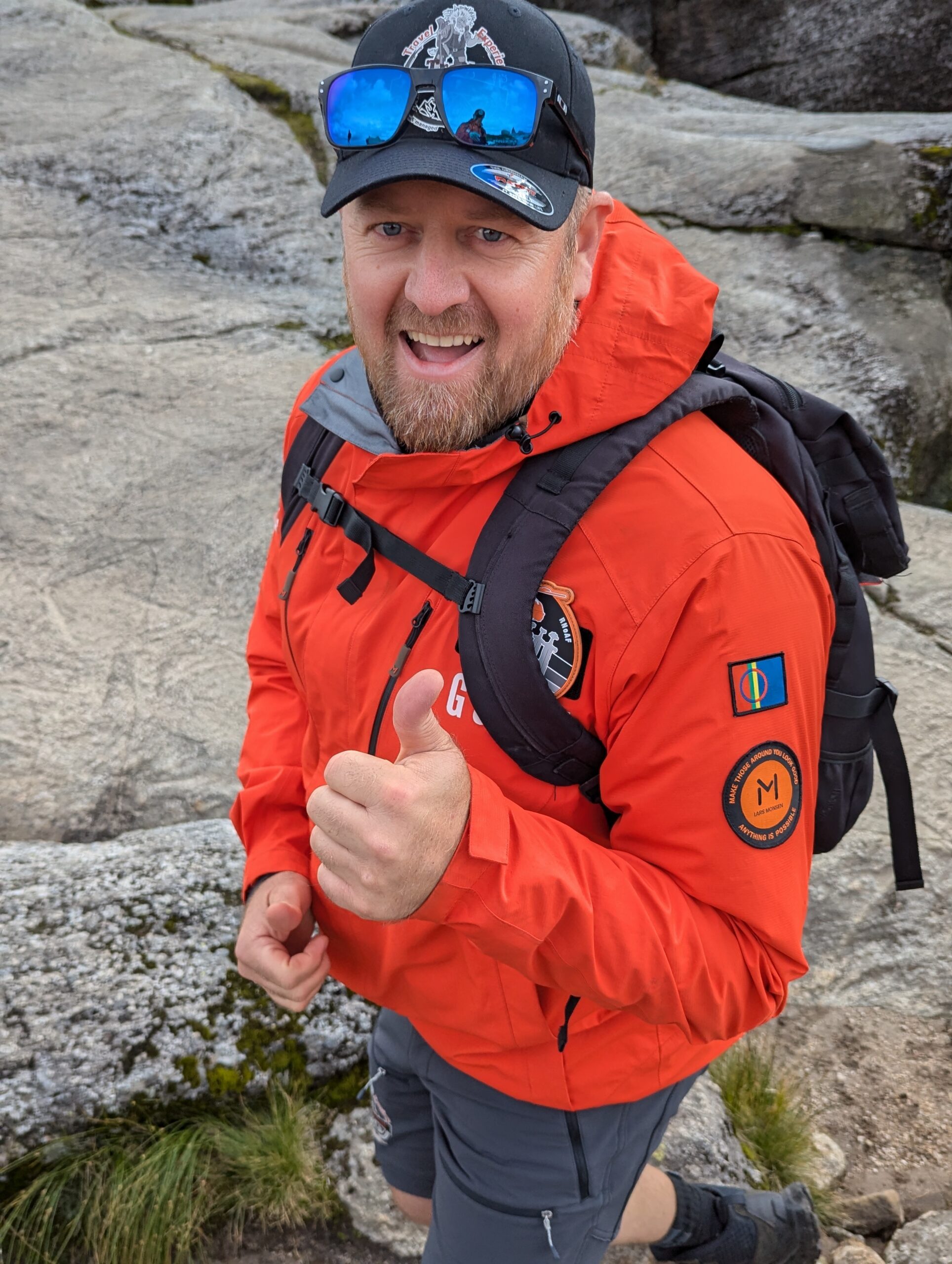 Hiking group on the Trolltunga route in Hardanger
Odda, Skjeggedal and Mågelitopp
Odda is the practical base for Trolltunga. From there, shuttle buses and road connections lead towards P2 Skjeggedal, while a separate shuttle can continue from P2 to P3 Mågelitopp during the main season.
Starting from P3 reduces both distance and climbing, but parking and shuttle capacity are limited and should be planned in advance. Starting from P2 gives the full 27 km route and adds the steep road climb to Mågelitopp.
Allow a full day
From P2, official guidance is 8–12 hours for 27 km return. From P3, allow 7–10 hours for 20 km return. Start early and keep enough time in reserve for weather, breaks and the return journey.
When should you hike Trolltunga?
1 June to 30 September
This is the official summer season. Experienced hikers can normally hike independently during this period, but the route is still long, exposed and weather-dependent. Check current trail information and the forecast before leaving.
Start early
Even in summer, daylight and weather matter on a 7–12 hour mountain day. An early start gives more margin for breaks, slower pace and changing conditions.
Outside the summer season
For the rest of the year, official Trolltunga guidance recommends going with a guide. Snow, ice, wind and short daylight can turn the route into a very different mountain undertaking.
This is not a hike where a fixed calendar date guarantees easy conditions. Check current local guidance before departure.
Local judgement matters more than knowing the path
Do not build the day around the photograph
Give yourself time for the trail. The strongest part of a guided day is often what happens before and after the plateau: changing weather, quieter sections of trail, conversations and viewpoints that are easy to walk straight past.
Use the conditions, not a rigid clock
In summer, long daylight gives flexibility. In winter, the opposite is true. Start time, pace and turnaround decisions should reflect daylight, surface conditions and weather on that day.
Want Trolltunga as part of a longer hiking journey?
Norway’s 4 Top Hiking Adventures
Trolltunga is currently included in our multi-day hiking journey combining several of Norway’s major mountain experiences. The route planning, transport between regions and day-to-day logistics are handled as part of the overall trip.
Pulpit Rock, Kjerag, Trolltunga or Flørli 4444?
These are very different mountain days. Pulpit Rock is the most manageable introduction. Kjerag and Trolltunga demand considerably more time and fitness, while Flørli 4444 is defined by its steep 4,444-step staircase above Lysefjord. You can also compare the full destination collection on our Top 5 Hikes page.
| Hike | Difficulty | Duration | Good fit for | Tour |
|---|---|---|---|---|
| Pulpit Rock / Preikestolen | Moderate | About 4 h hiking / approx. 6 h tour | First-time visitors, cruise-day guests and active travellers wanting a manageable Lysefjord hike | See tour |
| Kjerag | Demanding | 10–12 h tour | Fit hikers comfortable with a long mountain day, steep climbs and exposed terrain | See tour |
| Trolltunga | Very demanding | Full-day hike | Experienced, fit hikers prepared for a long day in mountain terrain | See 4 Top Hikes tour |
| Flørli 4444 | Demanding | 10–12 h tour | Active travellers comfortable with a long, steep staircase and a different Lysefjord experience | See tour |
Trolltunga is currently included in our Norway’s 4 Top Hiking Adventures. A separate Trolltunga tour will be added later.
Want Trolltunga included in your Norway hiking trip?
A demanding mountain day is easier to enjoy when the wider travel plan and logistics are already handled.
Questions people ask before hiking Trolltunga
How long is the Trolltunga hike?
From P2 Skjeggedal, the round trip is about 27 km and normally takes 8–12 hours. From P3 Mågelitopp, the route is about 20 km and normally takes 7–10 hours.
How difficult is Trolltunga?
Trolltunga is graded very demanding. The route is long, exposed to changing weather and requires enough fitness and reserve energy for the full return journey.
Where does the Trolltunga hike start?
The main starting points are P2 Skjeggedal and P3 Mågelitopp near Odda. P3 shortens both the distance and the initial climb, but access and shuttle capacity should be planned in advance.
Can I hike Trolltunga without a guide?
During the official summer season, experienced and well-prepared hikers commonly hike independently. Outside the main summer season, official guidance recommends hiking with a guide because snow, ice, weather and daylight change the character of the route.
Can Trolltunga be hiked in winter?
Winter hiking is possible only as a very different mountain undertaking, with snow, ice and limited daylight. Visitors should not treat winter Trolltunga as the same hike as the summer route.
Is Trolltunga suitable for children?
The route is long and physically demanding. Suitability depends on the child’s mountain experience, fitness, weather and ability to manage a 7–12 hour day. This is not a casual family walk.
One mountain. A very good day.
Make Trolltunga part of a bigger Norway hiking journey
Trolltunga demands a full day on the mountain. We can place that day inside a wider itinerary where transport, timing and the next stage are already planned.